
Digital Marketing: The Complete Guide for Beginners Digital marketing has become one of the most important parts of modern business. As more people use smartphones, search engines, social media platforms, websites, and online shopping platforms, businesses need a strong digital presence to reach their customers effectively. Whether you are a small business owner, startup, freelancer, or large company, digital marketing can help you attract new customers, build brand awareness, generate leads, and increase sales.
Unlike traditional marketing, digital marketing allows businesses to connect with their target audience through online channels. It also provides valuable data that helps businesses understand customer behavior and measure the performance of their marketing campaigns.
In this complete guide, we will explore what digital marketing is, why it is important, its major types, how to create an effective digital marketing strategy, and the benefits it can provide to businesses.
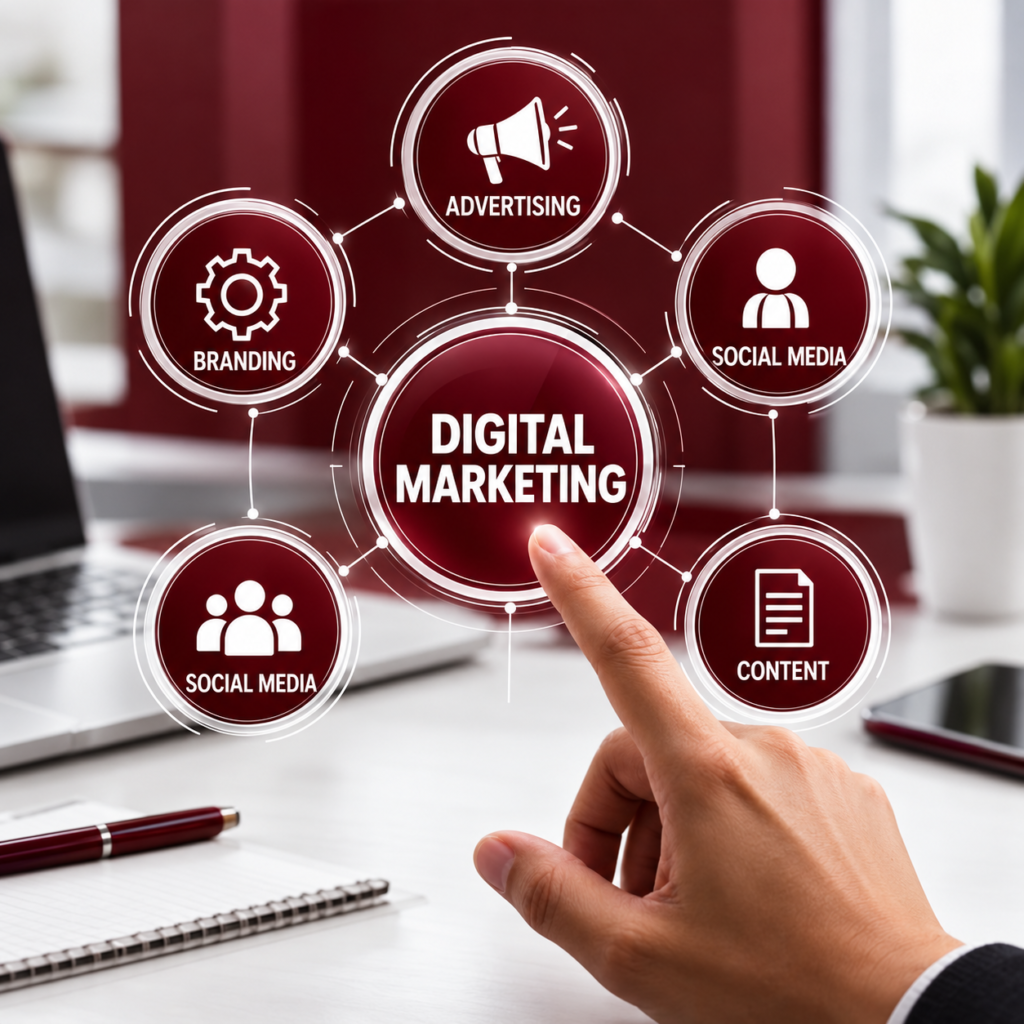
What Is Digital Marketing?
Digital Marketing: The Complete Guide for Beginners
Digital marketing refers to the promotion of products, services, brands, or businesses through digital channels. These channels include search engines, websites, social media platforms, email, online advertisements, video platforms, and other internet-based communication channels.
Traditional marketing methods such as newspapers, television advertisements, radio, magazines, and billboards can still be useful. However, digital marketing provides businesses with more opportunities to target specific audiences and measure their results.
For example, a local business can use search engine optimization to appear when people search for its services online. It can also use social media marketing to communicate with customers, publish useful content, and promote special offers.
Some of the major areas of digital marketing include Search Engine Optimization (SEO), social media marketing, content marketing, email marketing, pay-per-click advertising, influencer marketing, affiliate marketing, and online reputation management.
Why Is Digital Marketing Important?
Digital Marketing: The Complete Guide for Beginners
The internet has changed the way people discover businesses and make purchasing decisions. Before buying a product or service, customers often search online, read reviews, compare different options, watch videos, and visit social media pages.
Because of this change in customer behavior, having an online presence has become extremely important for businesses.
A well-planned digital marketing strategy helps businesses reach potential customers at different stages of their buying journey. A person may first discover a brand through Google, later follow the business on Instagram, read a blog post, and finally become a customer.
Another important advantage of digital marketing is flexibility. Businesses can choose strategies according to their goals and budgets. A small business can begin with SEO, social media content, and blogging without spending a large amount on advertising.
Digital marketing also makes it easier to measure performance. Businesses can track website visitors, clicks, leads, conversions, engagement, and sales. This information can be used to improve future marketing campaigns.
Major Types of Digital Marketing
Digital Marketing: The Complete Guide for Beginners
Digital marketing includes several different strategies. Each strategy has a specific purpose, and businesses can combine multiple methods to achieve their goals.
1. Search Engine Optimization
Digital Marketing: The Complete Guide for Beginners
Search Engine Optimization, commonly known as SEO, is the process of improving a website so that it can appear higher in search engine results.
When people search for products, services, questions, or information related to a business, SEO can help the website become more visible.
SEO includes several activities such as keyword research, on-page optimization, technical SEO, quality content creation, internal linking, website speed optimization, mobile optimization, and earning relevant backlinks.
For example, if someone searches for “digital marketing services near me,” businesses that have optimized their websites may have a better opportunity to appear in relevant search results.
One of the biggest advantages of SEO is that it can generate organic traffic without requiring businesses to pay for every individual click. However, SEO is a long-term strategy that requires consistency, quality content, and continuous optimization.
2. Social Media Marketing
Digital Marketing: The Complete Guide for Beginners
Social media marketing involves promoting a business, product, service, or personal brand through social media platforms.
Popular platforms include Instagram, Facebook, LinkedIn, YouTube, Pinterest, and other social networks.
Businesses can use social media to share educational content, product updates, customer testimonials, videos, images, offers, announcements, and behind-the-scenes content.
Social media is not only about selling products. It is also about building relationships with customers and creating a strong online community.
For example, a clothing brand can share styling tips, new product collections, customer photos, short videos, and fashion-related content. This type of content can increase engagement and help the brand remain visible to its audience.
3. Content Marketing
Digital Marketing: The Complete Guide for Beginners
Content marketing focuses on creating and distributing useful, valuable, and relevant content for a specific audience.
Common forms of content marketing include blog posts, articles, videos, infographics, ebooks, guides, podcasts, social media posts, and newsletters.
The main purpose of content marketing is to provide information that helps the audience solve problems or answer questions.
For example, a digital marketing professional can publish articles about SEO, social media strategies, website optimization, keyword research, and online advertising. People searching for this information may discover the content through search engines.
High-quality content can increase website traffic, improve brand authority, build trust, and support SEO efforts.
4. Email Marketing
Digital Marketing: The Complete Guide for Beginners
Email marketing is another powerful digital marketing strategy. It allows businesses to communicate directly with existing customers and potential customers.
Businesses can use email marketing to send newsletters, product announcements, special offers, educational information, event invitations, and personalized recommendations.
One major advantage of email marketing is that businesses can communicate with people who have already shown interest in their products or services.
A successful email marketing campaign should provide value rather than sending promotional messages repeatedly. Useful information, personalized content, and relevant offers can help improve customer engagement.
5. Pay-Per-Click Advertising
Digital Marketing: The Complete Guide for Beginners
Pay-per-click advertising, commonly known as PPC, is a form of paid digital advertising where businesses typically pay when users click on their advertisements.
PPC advertising can provide businesses with quick visibility on search engines and other online platforms.
Advertisers can target specific keywords, locations, demographics, interests, and audiences. This makes PPC useful for businesses that want to generate traffic, leads, or sales within a specific period.
However, successful PPC advertising requires proper keyword selection, compelling ad copy, accurate audience targeting, effective landing pages, and regular campaign optimization.
Businesses should also monitor important metrics such as clicks, conversion rate, cost per click, and return on advertising spend.
6. Influencer Marketing
Digital Marketing: The Complete Guide for Beginners
Influencer marketing involves collaborating with individuals who have an established audience on social media or other online platforms.
Influencers can promote products or services through videos, posts, reviews, tutorials, or recommendations.
The effectiveness of influencer marketing depends on choosing the right influencer. Businesses should consider audience relevance, engagement, credibility, and content quality instead of focusing only on follower count.
A smaller influencer with a highly relevant audience can sometimes provide better results than a large influencer with an audience that is not related to the business.
7. Affiliate Marketing
Digital Marketing: The Complete Guide for Beginners
Affiliate marketing is a performance-based marketing strategy where individuals or businesses promote products or services and receive a commission for successful sales or conversions.
Affiliates can promote products through websites, blogs, social media, email newsletters, videos, and other digital channels.
This strategy can help businesses expand their reach while paying commissions based on specific results.
How to Create a Digital Marketing Strategy
Digital Marketing: The Complete Guide for Beginners
A successful digital marketing campaign does not begin with randomly posting content or running advertisements. It starts with proper planning and understanding the business and its customers.
Step 1: Identify Your Target Audience
Digital Marketing: The Complete Guide for Beginners
The first step is to understand who your ideal customers are.
Businesses should consider factors such as age, location, interests, needs, problems, purchasing behavior, and online habits.
Understanding the target audience helps businesses create relevant content and choose the right marketing channels.
Step 2: Set Clear Marketing Goals
Digital Marketing: The Complete Guide for Beginners
The next step is to define specific and measurable goals.
Goals may include:
- Increasing website traffic
- Generating more leads
- Improving brand awareness
- Increasing social media engagement
- Growing online sales
- Improving search engine visibility
- Building an email subscriber list
Clear goals make it easier to measure whether a marketing campaign is successful.
Step 3: Choose the Right Marketing Channels
Digital Marketing: The Complete Guide for Beginners
Not every business needs to use every digital marketing platform.
A B2B company may benefit from SEO, content marketing, LinkedIn, and email marketing. A fashion or beauty brand may focus more on Instagram, Pinterest, video content, and influencer marketing.
The right channels depend on where the target audience spends time online.
Step 4: Create Valuable Content
Digital Marketing: The Complete Guide for Beginners
Content plays an important role in digital marketing.
Businesses should create content that educates, informs, entertains, or solves problems for their audience.
Instead of focusing only on promotional content, businesses can provide useful tips, tutorials, guides, answers to common questions, customer stories, and industry insights.
Valuable content can help build trust and encourage people to interact with a brand.
Step 5: Optimize for Search Engines
Digital Marketing: The Complete Guide for Beginners
Businesses should optimize their websites and content for relevant search terms.
Keyword research helps identify what potential customers are searching for online. These keywords can then be naturally incorporated into website pages, blog posts, headings, titles, and descriptions.
However, businesses should avoid keyword stuffing. Search engines and users both benefit from content that is natural, useful, readable, and relevant.
Step 6: Track and Analyze Results
Digital Marketing: The Complete Guide for Beginners
Digital marketing should always be measured.
Businesses can monitor website traffic, engagement, clicks, leads, conversions, sales, and other important metrics.
Analyzing these results helps identify which strategies are performing well and which areas need improvement.
Benefits of Digital Marketing
Digital marketing provides many benefits for businesses of different sizes.
Increased Brand Visibility
A strong digital presence can help businesses become more visible to potential customers. SEO, social media, content marketing, and online advertising can all contribute to increased visibility.
Wider Audience Reach
Traditional marketing can sometimes be limited by location. Digital marketing allows businesses to reach people locally, nationally, or internationally.
A small business can target customers in a specific local area, while an online business can reach customers across different countries.
Cost-Effective Marketing
Digital marketing offers options for different budgets. Businesses can use organic strategies such as SEO and content marketing or invest in paid advertising when appropriate.
This flexibility makes digital marketing accessible to startups and small businesses as well as larger companies.
Better Customer Engagement
Social media, email, websites, and other digital channels allow businesses to communicate directly with their customers.
Customers can ask questions, leave comments, provide feedback, and interact with brands.
Measurable Results
One of the biggest advantages of digital marketing is the ability to measure performance.
Businesses can analyze traffic, clicks, impressions, engagement, leads, conversions, and sales to understand how their campaigns are performing.
Personalized Marketing
Digital platforms allow businesses to create personalized experiences for different customer groups.
Businesses can provide different content, advertisements, offers, and messages based on customer interests and behavior.
Common Digital Marketing Mistakes to Avoid
Although digital marketing provides many opportunities, businesses can make mistakes if they do not have a clear strategy.
One common mistake is trying to use every social media platform at the same time. It is usually better to focus on the platforms where the target audience is most active.
Another mistake is creating content without understanding customer needs. Content should always provide value and have a clear purpose.
Ignoring SEO is another common problem. Even if a website looks attractive, it may struggle to receive organic traffic if it is not properly optimized for search engines.
Businesses should also avoid expecting immediate results from every strategy. SEO and content marketing often require time and consistency, while paid advertising may provide faster visibility.
The Future of Digital Marketing
Digital marketing continues to evolve as technology and customer behavior change.
Artificial intelligence, automation, video content, personalization, voice search, and data-driven marketing are influencing the way businesses communicate with customers.
Businesses that want to remain competitive should be willing to adapt to new technologies and changing customer expectations.
However, technology alone does not guarantee success. Understanding customers, creating valuable content, building trust, and providing a positive customer experience will continue to be important.
Conclusion
Digital marketing has become an essential part of modern business growth. From SEO and social media marketing to content marketing, email marketing, PPC, influencer marketing, and affiliate marketing, businesses have many opportunities to connect with their target audience online.
The key to successful digital marketing is not simply using more platforms or spending more money. It is about understanding the target audience, setting clear goals, choosing the right strategies, creating valuable content, and continuously analyzing results.
Businesses that invest in a consistent and customer-focused digital marketing strategy can improve their online visibility, generate more leads, build stronger customer relationships, and create long-term growth.
Whether you are starting a new business or trying to improve an existing online presence, digital marketing can provide the tools and strategies needed to compete effectively in today’s digital world.